
Photo Credit: Marybeth Dinges
There’s a calm that comes with waiting for a train in Tokyo. Riders queue silently behind the yellow line, and the stillness settles. But then, in an instant, the calm shifts into motion as the train arrives, the passengers board, and the train carries you forward. That balance between the intentional pauses and the momentum mirrors what I experienced during my time in Japan.
The International Practicum in Japan was a defining moment in my MBA journey. Through the Scheller College of Business’s international practicum program, I had the opportunity to engage with a globally-recognized U.S. company and address local market challenges. This experience highlighted the importance of cultural nuance and adaptability in business strategy and challenged me to think beyond a U.S. consumer centric-lens.
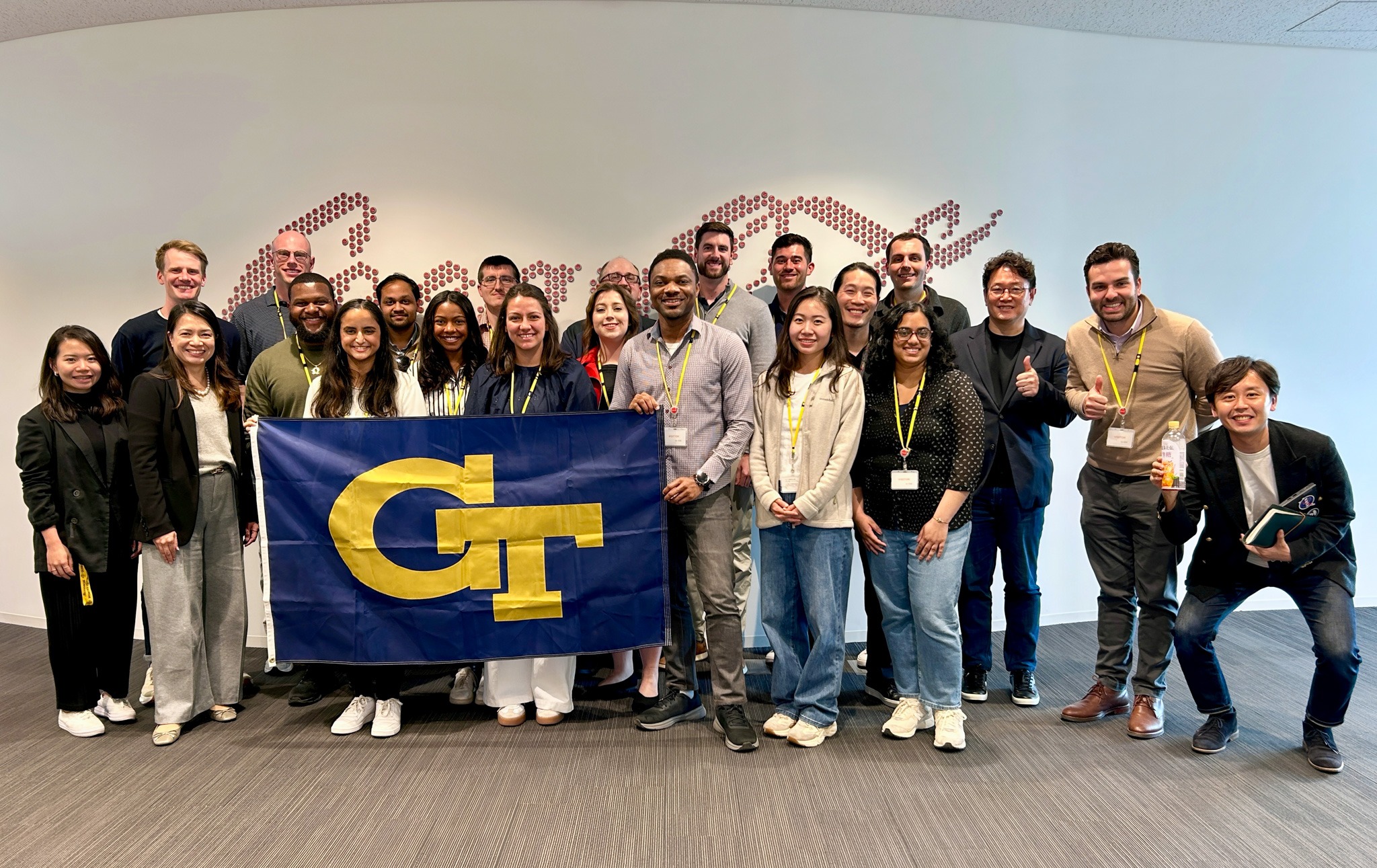
In this program, I had the opportunity to problem-solve in real-time, adapt to ambiguity, and think beyond the frameworks I had grown accustomed to in U.S.-based projects. It was a crash course not only in global business, but also in resilience and flexibility. Our work underscored the importance of designing strategies and recommendations that are both globally aligned and locally relevant, and I left with a deeper appreciation for the complexity of leading international brands.

This practicum didn’t just grow my professional skills but also gave me a renewed sense of confidence in my abilities. This practicum helped reshape the way I view myself and showed me that I can thrive in unfamiliar contexts, contribute meaningfully in global conversations, and tackle challenges much larger than I once thought possible. This perspective shift has been my favorite souvenir of this experience, and the confidence I’ve gained has powered me through the rest of my MBA program.
One of the most meaningful parts of the experience was seeing how deeply respect is embedded in everyday life and business interactions in Japan. Traditions and cultural practices aren’t just preserved—they’re layered thoughtfully into modern systems in a way that creates harmony rather than conflict. It struck me that while Japan is known for its order and precision, there is also an intentional inclusiveness, a sense that there’s space for everyone and everything to coexist. That balance of tradition, innovation, and respect broadened my appreciation for how culture shapes business and reinforced how important it is to approach global challenges with humility and intentionality.

In short, my time in this practicum was transformative. I went in seeking to broaden my marketing lens beyond the U.S. frameworks I’ve known, but I returned with more than just technical knowledge and new skills in my professional toolkit. This experience gave me a renewed sense of curiosity, a deeper appreciation for the intersection of culture and business, and lessons in leadership that extend far beyond the classroom.
 Rachel Sprouse